


Contemporary Issues in Emerging Markets Conference (CIEMC 2.0)
Contemporary Issues in Emerging Markets Conference (CIEMC 2.0)
- About IIM Bodh Gaya
- About RUDN University
- About the Conference
- Director’s Message
- Call for Papers
- Important Dates
- Submission Guidelines
- Publication Opportunity
- Conference Registration Fees
- Paper awards
- Keynote speakers
- Organizing Committee
- Contact Us
About IIM Bodh Gaya
 The Indian Institutes of Management have been the archetype of management schooling in India since their foundation after our independence. IIMs are perceived as the most prestigious and elite B-schools in India, which lay emphasis on practical experience and critical thinking instead of rote learning and a conventional academic schedule. Building on the grand heritage of the IIM brand, IIM Bodh Gaya fosters a culture and curriculum whose sole purpose is to create socially responsible managers and emotionally mature leaders. A dynamic curriculum in consonance with academics and industry experts provides the students with opportunities to master new skills and explore diverse perspectives. Apart from the conventional classroom setup, IIM Bodh Gaya lays emphasis on practical learning as students partake in case studies, sessions with industry experts, live projects, etc. The institute’s thrust on meaningful research is evident through the credentials and accomplishments of its faculty, who have publications in ABDC and Scopus-listed journals of repute. Three of the faculties have been recognized as being among the top 2% of scientists globally across all disciplines, according to the latest publication by Elsevier.' In a short span of time, IIM Bodh Gaya has strengthened its position in the corporate world, with its students contributing to the illustrious business organizations of the country.
IIM Bodh Gaya acknowledges the significance of exposure to global standards and contemporary trends for the enrichment of its students’ learning experience. To bring that international exposure and cultural diversity to the campus, the institute has established collaborations with several reputed institutions in France, Venezuela, Russia, Mexico, Italy and South Korea, while discussions are underway with many other international universities across the globe.
Historically, the eastern part of the country has been an eminent seat of learning with the ancient universities of Nalanda and Vikramshila, where learners from all over the world congregated for the pursuit of knowledge. Having been recognized as a key Buddhist destination, Bodh Gaya attracts millions of tourists every year. An ancient seat of learning that represents one of the prominent paths to enlightenment, Bodh Gaya is home to Mahabodhi Temple, a UNESCO World Heritage Site and several other notable temples and monasteries. Nestled in Bodh Gaya is the iconic 80 ft. statue of Buddha and the Indosan Nippon temple that was constructed in 1972 and has a gallery of Japanese art. This land of enlightenment continues to serve as a source of inspiration for IIM Bodh Gaya in its journey to become The Enlightening IIM.
The Prime Minister of India, Shri Narendra Modi, inaugurated the first phase of the campus in February 2024. Currently, IIM Bodh Gaya offers a robust portfolio of long-duration, full-time, residential and degree-awarding programs comprising the flagship Master of Business Administration (MBA), MBA in Hospital and Healthcare Management (MBA-HHM), MBA in Digital Business Management (MBA-DBM), Integrated Programme in Management (IPM), and the Fellow Programme in Management (FPM). The institute now has world-class infrastructure infusing modernity with classical architecture, which reflects the significant improvement of NIRF ranking over the past three years. IIM Bodh Gaya, 73 in 2022, scaled to 53 in 2023 and jumped another 20 ranks to be positioned at 33 in 2024 and moved up to 31 in the NIRF 2025. Hosting the largest number of students among all IIMs, IIM Bodh Gaya also successfully hosted the GLOGIFT Conference on “Flexible Strategies and Management Practices for a Sustainable Future in 2024” and the International Conference on Data Analytics and Cyber Security (DACS).
About RUDN University
 Peoples' Friendship University of Russia (RUDN), founded in 1960, is a leading public research university in Moscow, renowned for its international community and interdisciplinary education. Located at 6 Miklukho-Maklaya St, the campus brings together students from more than 160 countries and fosters an inclusive environment with accessible facilities. The university integrates education, research, and innovation across the social sciences, humanities, natural sciences, engineering, medicine, law, and economics, offering degree pathways from bachelor’s and specialist programs to master’s, PhD, residency, and continuing education.
RUDN’s structure includes faculties and institutes such as the Faculty of Humanities and Social Sciences, Faculty of Philology, Faculty of Science, Faculty of Economics, Faculty of Ecology, Medical Institute, Law Institute, Institute of World Economy and Business, Institute of Foreign Languages, Institute of Hospitality Business and Tourism, Agricultural and Technological Institute, and several training and research centers. These units deliver 300–400 educational programs aligned with both global and national priorities.
The university is recognized for practice-oriented training, multilingual education, and strong links with industry and international partners. Students benefit from modern laboratories, research schools, and opportunities for interdisciplinary projects and internships. RUDN’s Sochi branch expands regional engagement and offers additional programs. Admissions to undergraduate and specialist programs are based on the Unified State Exam or university entrance tests.With a mission to advance knowledge and promote intercultural dialogue, RUDN regularly hosts international conferences, publishes scholarly works, and supports initiatives that connect science, education, and society.
About the Conference
Furthering the success of the first International Conference on Contemporary Issues in Emerging Market Economies (2022), IIM Bodh Gaya is excited to bring its second edition in collaboration with the Peoples' Friendship University of Russia (RUDN). Emerging market economies are drivers of global growth, but face challenges such as financial volatility, structural inequalities, and climate risks. Achieving sustainable and stable growth amid these complexities requires rethinking policies, institutions, and economic strategies. This international conference, themed "Reimagining Emerging Market Economies: Growth with Stability," brings together scholars, policymakers, and industry experts to explore innovative solutions for balancing economic expansion with long-term stability. Through keynote sessions, panel discussions, and research presentations, the conference will address critical issues like macroeconomic policies, financial innovation, sustainability, and socio-economic development, fostering interdisciplinary dialogue on emerging market dynamics. Join us in this intellectual endeavor to shape the future of emerging economies, ensuring inclusive, resilient, and sustainable growth in an evolving global order.
Director’s Message for CIEMC 2.0 Conference
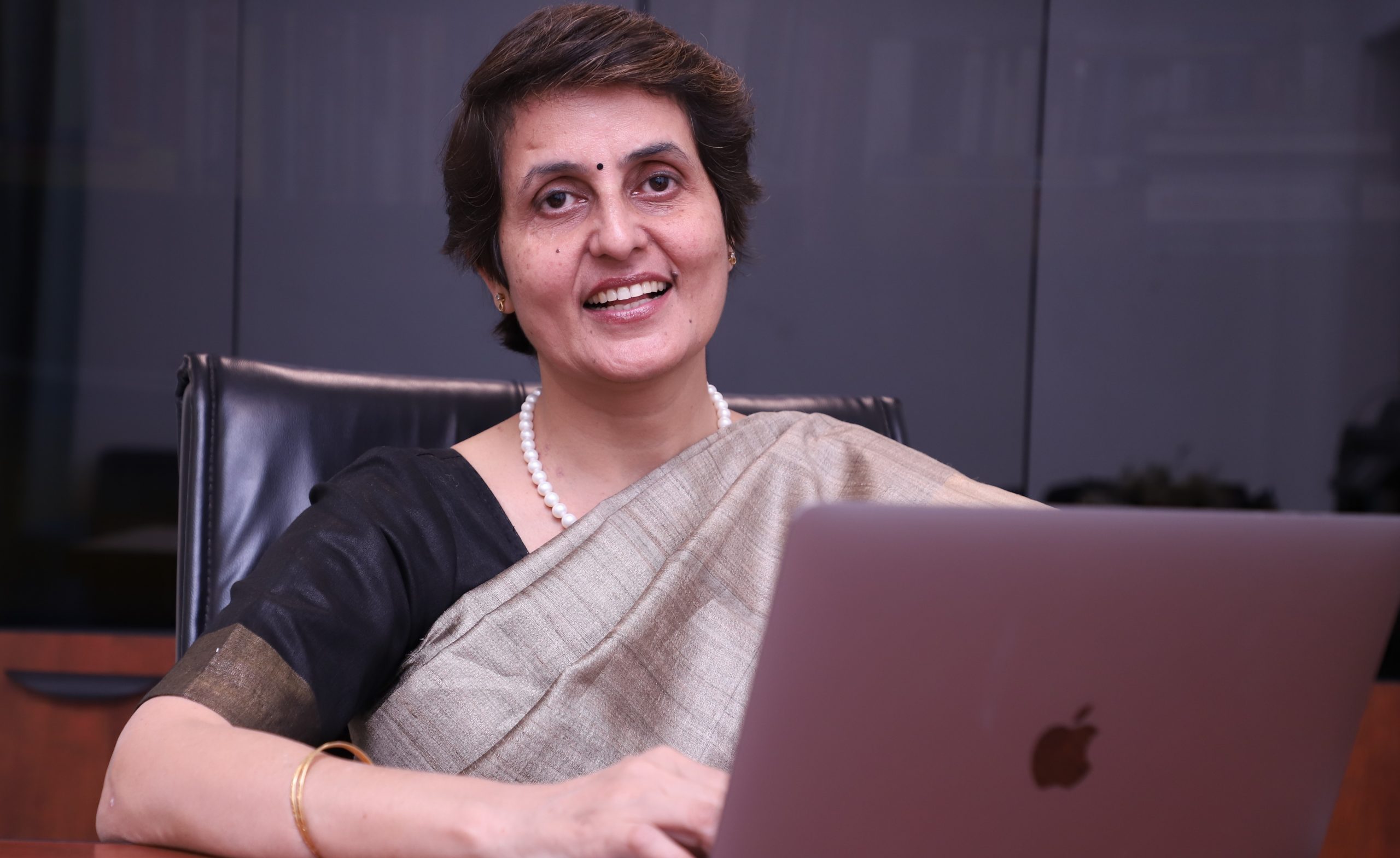
Welcome to Bodh Gaya – The Land of Enlightenment!
It gives me immense pleasure to invite you to the second edition of the Contemporary Issues in Emerging Markets Conference (CIEMC 2.0), organized by the Indian Institute of Management Bodh Gaya, which is scheduled to be held on the 24th and 25th of April 2026, the conference carries the timely and thought-provoking theme: “Reimagining Emerging Market Economies: Stable Growth with Sustainability.” CIEMC 2.0 aims to provide a vibrant platform for academicians, researchers, industry leaders, and policymakers to engage in meaningful dialogue on the evolving dynamics of emerging markets. As these economies are undergoing a rapidly challenging and changing global environment, the need for balancing growth with long-term stability and sustainability has never been more urgent. At IIM Bodh Gaya, we believe that institutions of higher learning play a critical role in shaping inclusive, resilient, and forward-looking societies. Through knowledge creation, interdisciplinary research, and global engagement, we seek to contribute to sustainable development goals and thought leadership in emerging market discourse.
We look forward to your active participation and valuable contributions to this international forum, set against the serene and historic backdrop of Bodh Gaya.
Warm regards,Director
Indian Institute of Management Bodh Gaya
Call for Papers
We extend a formal invitation to scholars, students, and professionals to submit research-oriented and practical papers that are in alignment with the conference's central theme. The conference is particularly keen on the broad subject areas and tracks detailed below and welcomes submissions related to any of the following tracks or related fields.
The central theme of this conference is “Reimagining Emerging Market Economies: Stable Growth with Sustainability.”
The following are the tracks:
Track 1: Macroeconomic Stability and Growth Strategies- Fiscal and Monetary Policies for Sustainable Growth
- Inflation Control and Exchange Rate Management
- Debt Sustainability and Financial Stability
- Role of Central Banks in Crisis Management
- Green Transformation and Global Economic Restructuring
- Transition to a Low-Carbon Economy and Climate Policy
- Circular Economy Models and Resource Efficiency
- Digitalization, Innovation, and Sustainable Development
- Global Trade, Inequality, and Inclusive Growth
- Emerging Market Trade Policies and WTO Reforms
- Foreign Direct Investment and Domestic Industries
- Global Value Chains and Resilient Supply Chains
- Regional Trade Agreements and Bilateral Negotiations
- Foreign Aid and Assistance for Sustainable Development
- Fintech, Digital Payments, and Financial Inclusion
- Cryptocurrencies, CBDCs, and Emerging Regulatory Challenges
- AI, Big Data, and Digital Governance in Emerging Economies
- E-Commerce, Startups, and Entrepreneurship Ecosystems
- Green Technologies and Renewable Energy
- AI and Digital Solutions for Sustainability
- Agricultural innovations and productivity
- Technology for Climate Adaptation and Resilience
- Future of Work, Automation, and Skill Development
- Income Inequality, Social Protection, and Inclusive Growth
- Migration, Demographics, and Human Capital
- Gender Equity and Economic Participation
- Diversity and inclusion
- Geopolitics and energy market dynamics
- Defense and Peace Economics
- Economic Sanctions
- Shifts in Global Economic Leadership
- Eco-tourism
- Tourism and local economy development
- Decarbonizing transportation
- Choice behavior of tourism destination and travel mode
- Green HRM and Economic Growth
- Responsible Consumption and Sustainable Economy
- ESG and Economic Growth
- Sustainable Finance and Economic Growth
- Business Strategy and Environment
- Demographic Transition and Growth Dynamics
- Demographic Dividend and Labor Market Opportunities
- Ageing Populations and Economic Sustainability
- Human Capital Formation and Skill Development
- Gender, Employment, and Inclusive Growth
Important Dates
| Events | Dates |
| Submission starts | 15 November, 2025 |
| Last date for submission | 15 March, 2026 |
| Date of acceptance of the paper | 20 March, 2026 |
| Registration window | 21 March -15 April, 2026 |
| Pre-conference workshop | 23 April, 2026 |
| Conference presentations | 24-25 April, 2026 |
Submission Guidelines
Types of Submissions Accepted- Extended abstracts
- Research papers
- Review papers
- Empirical papers
- Working papers
- Case studies
- Structured format: Purpose, Design/Methodology/Approach, Findings, Implications/ Originality/Value.
- Expanded structured format: Purpose, Design/Methodology/Approach, Findings, Research Limitations/Implications, Practical Implications, Originality/Value.
| Paper Structure | Abstract, Keywords, Introduction, Literature Review, Theoretical Framework, Methodology, Findings, Implications, Conclusion, References, Appendices |
| Font | Times New Roman, 12-point |
| Reference Style | APA |
| Paragraph Spacing | Single |
| Margin | Normal |
| Layout | Single Column, Portrait |
| Page Numbers | Bottom Centered |
| File Format | PDF file |
All submissions will be collected through Google Forms. Follow the link below to upload your file. Submit Your Work Here: https://forms.gle/CBnDxtCFYwwLtMDs7
The submission form is straightforward and will guide you through the required steps, including selecting your track or sub-track.
File Naming Convention: Name your file as: Track No_Sub-track No_Last Name of Author.pdf. For example, if a submission is to be made for "Track 1: Sustainable Finance for Flourishing Future" under sub-track "3. Innovative Sustainable Financing Instruments", by an author whose last name is Kakani, then the file has to be named "1_3_Kakani.pdf"
All communication will be done with the corresponding author only. The e-mail address provided at the time of submission should also be used for Conference Registration. There will be no options to revise the paper after the submission deadline.
A single author may make up to three submissions across tracks. Also, a single paper cannot be submitted across multiple tracks, even if it may be relevant for different tracks. The author should select the best fit in such a scenario and submit it to the corresponding track. The submissions must be original. All submissions are subjected to double-blind peer review and are expected to meet standards of academic excellence. Identities of peer reviewers shall remain anonymous to the authors. Feedback on submissions shall be provided to the author(s) after the reviews are concluded.
If accepted, all the details provided by the corresponding author at the time of submission will appear exactly the same as they were submitted in the Conference Programme and Proceedings. Therefore, please ensure all the details (paper title, author names, etc.) are correctly mentioned. The corresponding author must ensure that all co-author(s) have given consent to submit the paper. Further, at least one author is required to register for the conference and present the accepted paper. Only the accepted papers that satisfy the criteria will be included in the conference’s proceedings/book of abstracts.
Please contact us for any further information or clarification at ciemc2@iimbg.ac.inPublication Opportunity
Accepted and registered abstracts will be published in the conference proceedings with leading academic publishers. Selected full-length papers may be considered for publication in the journals below. The conference has established collaborations with these journals and is exploring additional partnerships, including the possibility of an edited volume. The list of publication opportunities will be updated as new agreements are finalized
-
- Asia-Pacific Financial Markets (ABDC, Scopus)
- Economic Change and Restructuring (ABDC, Scopus)
- Journal of Economic and Administrative Sciences (ABDC, Scopus)
- IIMBG Journal of Sustainable Business and Innovation
- International Journal of Trade and Global Markets (ABDC, Scopus)
- International Journal of Economic Policy in Emerging Economies (ABDC, Scopus)
- International Journal of Monetary Economics and Finance (ABDC, Scopus)
Conference Registration Fees
| Category | Type | National Participants (IN) | International Participants (USD) |
| Faculty / Industry Professionals | Conference Only | 6,000 INR + GST | $100 + GST |
| Pre-Conference Workshop Only | 3,000 INR + GST | $50 + GST | |
| Both Conference & Workshop | 8,000 INR + GST | $150 + GST | |
| Research Scholars | Conference Only | 3,000 INR + GST | $50 + GST |
| Pre-Conference Workshop Only | 2,000 INR + GST | $50 + GST | |
| Both Conference & Workshop | 4,000 INR + GST | $50 + GST | |
| Students (UG/PG) | Conference Only | 1,000 INR + GST | $50 + GST |
| Both Conference & Workshop | 1,000 INR + GST | $50 + GST |
*Early bird registration closes on 15 April 2026
*Late submissions will attract an additional charge of 2000 INR for National Participants and 50 USD for International Participants.
*GST is applicable as per government norms.
* Limited accommodation will be available for the participants basis of a first-come, first-served basis.
*For online presentations, the fee shall remain the same.
Paper awards
Best Paper Awards: Three awards will be presented to recognize outstanding research contributions:
- First Prize: INR 20,000
- Second Prize: INR 15,000
- Third Prize: INR 10,000 (Open to all papers presented at the conference.)
Best Doctoral Paper Award: One award carrying a cash prize of INR 10,000 will be presented to the best paper based on doctoral research.
Keynote speakers
 Svetlana V. Ratner,
Senior Professor of Economics, Economic and Mathematical Modeling Department, Economic Faculty, RUDN University
Svetlana V. Ratner serves as Chief Researcher at the Laboratory of Economic Dynamics and Innovation Management, Institute of Control Sciences, Russian Academy of Sciences, Moscow. She holds advanced degrees, including Doctor of Economic Sciences and Candidate of Physical and Mathematical Sciences, reflecting her interdisciplinary expertise. As an Assistant Professor, she contributes to academic discourse in economic modeling and innovation processes. Her work bridges economics and mathematics, advancing research in dynamic systems and management strategies.
 Abhishek Saurav,
Senior Economist with the Global Investment Climate Unit of the World Bank Group's Finance, Competitiveness & Innovation Global Practice.
Abhishek Saurav is a Senior Economist in the Global Investment Climate Unit of the World Bank Group's Finance, Competitiveness & Innovation Global Practice, focusing on investment climate in developing countries. An Indian national, he leads policy research on foreign direct investment (FDI) and initiatives aimed at boosting competitiveness and sustainable private sector growth. He holds a doctorate in Public Policy and Public Administration from George Washington University, a master’s in public policy from George Mason University, and a bachelor’s in information technology from the University of Delhi. His notable work includes the Global Investment Competitiveness Survey 2021 on the “Future of FDI” and studies on FDI's impact on jobs and environmental sustainability.
 Bruno S. Sergi,
Professor, Faculty Affiliate of the Center for International Development at Harvard Kennedy School. Full Professor of Political Economy, University of Messina, Italy
Bruno S. Sergi is a Full Professor of Political Economy at the University of Messina, Italy, and has been teaching at the Harvard Extension School since 2011, having previously taught at the Harvard Summer School. He holds a PhD in economics from the University of Greenwich Business School, London, and serves as a Faculty Affiliate at the Harvard Kennedy School's Center for International Development. His research centers on the economics of emerging markets, emphasizing growth, sustainable development, entrepreneurship, and the Bruxelles Consensus he originated. Sergi is a prolific editor and founder of journals like the International Journal of Trade and Global Markets, and co-directs the Lab for Entrepreneurship and Development (LEAD) in Cambridge.
 Sabri Boubaker,
 Professor, École de Management de Normandie, France.
Sabri Boubaker is a Professor in Finance and serves as Vice President for Academic Affairs and Research (Dean) at EM Normandie Business School since 2019. He earned a PhD in Finance from Université de Paris-Est in 2006 and an HDR (Habilitation à Diriger des Recherches) in 2010. His research primarily explores ownership structures and control mechanisms in listed companies, with over 80 publications in leading international journals. Boubaker co-founded the Paris Financial Management Conference in 2013 and the Vietnam Symposium in Banking and Finance in 2016, and he is President of the International Society for the Advancement of Financial Economics (ISAFE).
Organizing Committee
| Patron | |||
| Prof. Vinita S. Sahay Director IIM Bodh Gaya |
|||
| Conveners | |||
| Prof. Muhammed Ashiq V Assistant Professor IIM Bodh Gaya |
Prof. Madhumita Das Assistant Professor IIM Bodh Gaya |
Prof. Gupteswar Patel Assistant Professor IIM Bodh Gaya |
Prof. Sharadendu Sharma Assistant Professor IIM Bodh Gaya |
| Advisory Committee | ||
| Prof. Aviral Kumar Tiwari Associate Professor IIM Bodh Gaya |
Prof. Inna V. Andronova Professor RUDN University, Moscow, Russia. |
Prof. Alexander L. Chupin Associate Professor RUDN University, Moscow, Russia. |
| Prof. Suresh K G Assistant Professor IIM Bodh Gaya |
Prof. Svetlana Balashova Associate Professor RUDN University, Moscow, Russia. |
Prof. Sabri Boubaker, Professor, École de Management de Normandie, France |
| Prof. Bruno S. Sergi Faculty Affiliate of the Center for International Development Harvard Kennedy School. Full Professor of Political Economy, University of Messina, Italy |
Prof. Konstantin G. Gomonov Associate Professor RUDN University, Moscow, Russia. |
Prof. Marina N. Khramova Associate Professor RUDN University, Moscow, Russia. |
| Prof. Anirban Sengupta Assistant Professor IIM Bodh Gaya |
||
| Conference Committee | ||
| Prof. Sharadendu Sharma Prof. Madhumita Das Prof. Gupteswar Patel Prof. Suresh K G Prof. Muhammed Ashiq V |
Prof. Aviral Kumar Tiwari Prof. Anirban Sengupta |
|
Contact Us
ciemc2@iimbg.ac.inProf. Muhammad Ashiq V
: +91 9645851785
Prof.Anirban Sengupta
: +91 8850109821
Event Venue
April 23rd -25th, 2026Indian Institute of Management Bodh Gaya
Uruvela, Prabandh Vihar
Bodh Gaya – 824234, Gaya, Bihar, India