Other Events


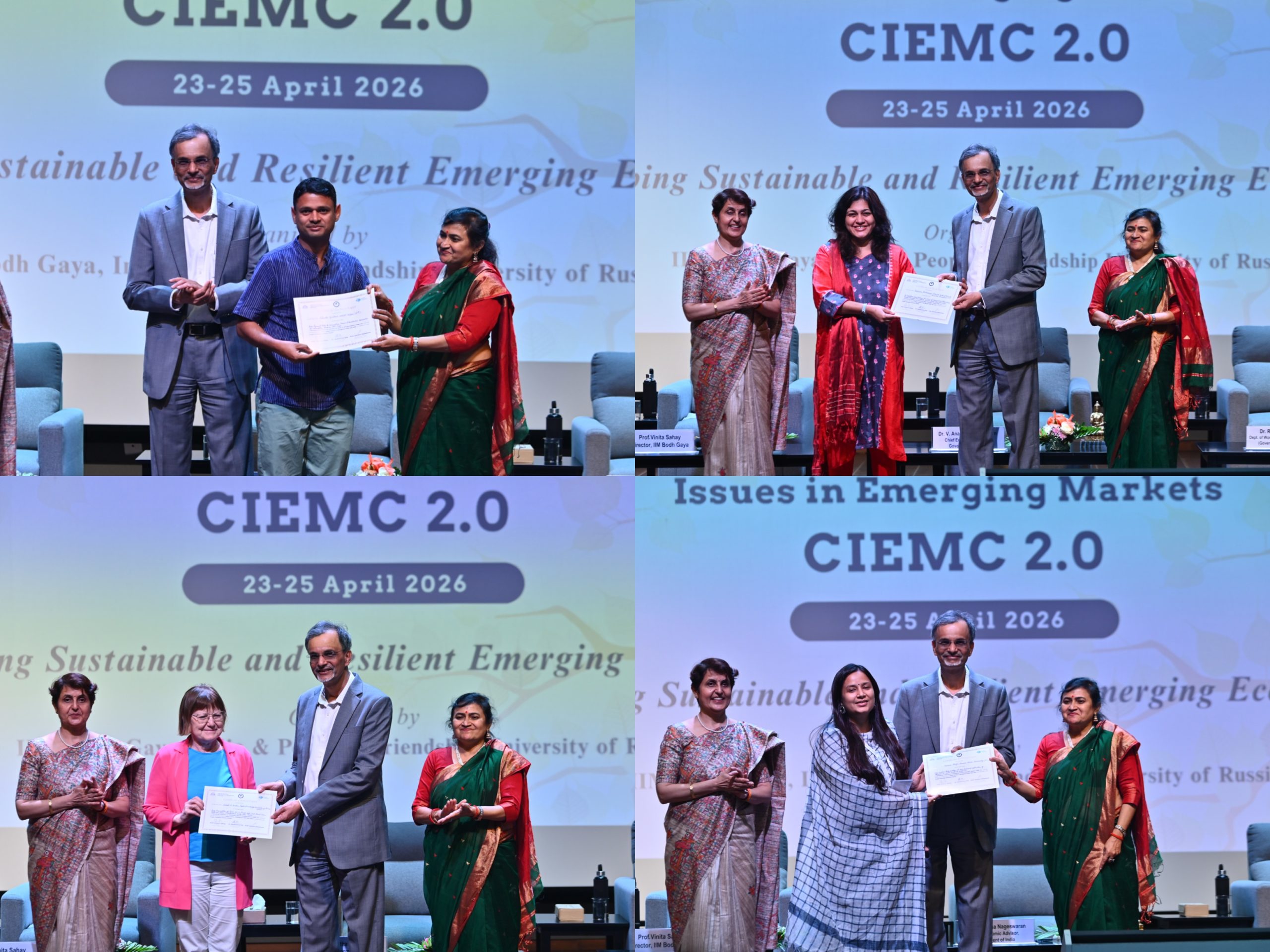
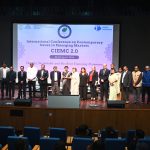
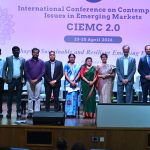
Indian Institute of Management Bodh Gaya successfully hosted the second edition of the Contemporary Issues in Emerging Market Conference (CIEMC 2.0) on April 23–25, 2026. Organised in collaboration with the Peoples’ Friendship University of Russia, the conference was anchored around the theme “Reimagining Emerging Market Economies: Growth with Stability”. Organised under the visionary leadership of Prof. Vinita S. Sahay, Director, IIM Bodh Gaya, the conference reflected IIM Bodh Gaya’s growing role in fostering dialogue at the intersection of academia, policy, and global economic challenges.
The conference opened with a pre-conference research workshop, which focused on strengthening research design and methodological rigour. The sessions covered manuscript writing and publication strategies, time series analysis with emphasis on causality and endogeneity, as well as quantitative and qualitative research methods. The workshop set the tone for the conference by emphasising the importance of producing research that is both analytically sound and policy relevant.
CIEMC 2.0 witnessed significant academic engagement, receiving 472 paper submissions from across India and several countries including the United States, United Kingdom, Italy, Russia, Malaysia, and Bangladesh. Following a rigorous peer-review process, 342 papers were selected. Around 300 authors presented their research ideas across 44 parallel technical sessions. The scale of participation reflected the growing importance of the conference as a platform for interdisciplinary and policy-oriented research on emerging market economies. Across the two days, the technical sessions covered a wide range of themes, including macroeconomic stability, financial systems, digital transformation, sustainability, labour markets, tourism, and geopolitics.
The inaugural session set the broader context for the conference discussions. Addressing the gathering, Shri Suman K. Bery, Vice Chairperson, NITI Aayog highlighted the transformation in how developing nations are perceived globally, noting that economies once considered peripheral are now central to global trade, demand, and production systems. He emphasised that emerging economies are increasingly shaping the trajectory of global growth and that India’s development vision will be driven by its youth, innovation, and entrepreneurial capacity. Guest of honour of the session Shri Manoj Kumar Singh, IAS, CEO, State Transformation Commission, Government of Uttar Pradesh underscored the structural strengths of emerging economies, particularly India’s demographic advantage and expanding services sector, while stressing the importance of leveraging technology and strengthening institutional capacity. He pointed out that future growth in emerging economies will depend on their ability to transition into consumption-driven systems supported by data-driven governance.
The conference also featured keynote addresses by leading international scholars. Prof Bruno Sergi, University of Messina, Italy spoke on the challenges associated with the green economy, cautioning against the risks of greenwashing and emphasising the need for transparency and accountability in sustainability practices. Dr. Marina Khramova, RUDN University, Russia examined demographic transitions and population ageing, highlighting their long-term implications for labour markets and economic growth in emerging economies. These sessions contributed to a broader understanding of structural transformations shaping global economic systems.
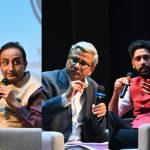
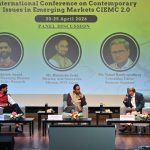
A key highlight of CIEMC 2.0 was the panel discussion on “Navigating Geopolitical Uncertainties in Emerging Markets,” which brought together Managing Director, Insignia Policy Research, and Mr. Himanshu Joshi, Program Lead at Atal Innovation Mission, NITI Aayog. Moderated by noted columnist and award-winning author, Mr. Tamal Bandyopadhyay, the panel explored how emerging economies can respond to global uncertainties, drawing on philosophical insights, including references to Buddha’s emphasis on balance and adaptability.
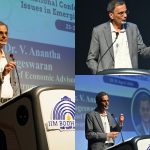
The valedictory session brought the conference to a close with reflections on the interconnected nature of contemporary economic challenges. Addressing the session, Chief Economic Advisor to Government of India Dr. V. Anantha Nageswaran emphasised that economic shocks can no longer be treated in isolation. He noted that disruptions in energy markets, labour dynamics, fiscal constraints, and global uncertainty are increasingly interlinked, making fragmented policy approaches less effective. He called for greater policy coherence across sectors, arguing that coordination, rather than growth alone, is now the central challenge for emerging economies. Dr. Rashmi Singh, IAS, Secretary, Department of Women and Child Development, Government of NCT of Delhi highlighted the issue of women’s participation in the economy, noting that while awareness has improved, the key challenge lies in implementation. She stressed the need to expand access to opportunities and strengthen women’s representation in the workforce and decision-making processes.
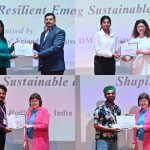
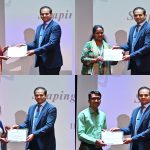
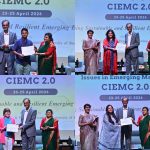
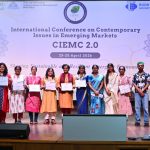
The conference also recognised outstanding research contributions through its Best Paper Awards, highlighting work that combined originality with strong methodological and policy relevance. The First Prize was awarded to Ms. Apoorva Singh from the Institute of Management Studies, Banaras Hindu University, for the paper “Why Investors Keep Investing: A Socio-Technical Explanation of Behaviour on Smart Investment Platforms.” The Second Prize was jointly awarded to Ms. Shweta Gwalani, a research scholar from Malaviya National Institute of Technology, Jaipur, for her paper “From Payment Mode to Consumption Process: A Qualitative Exploration of Consumption Values in UPI Usage,” and Leonid V. Sorokin from the Peoples’ Friendship University of Russia for “Energy Consumption of ‘Green’ AI in Brazil and ‘Coal-Based’ AI in China and India: A Comparative Study with Russia.” The Third Prize was awarded to Ms. Sreeparna Bhattacharyya from Silver Oak University, Ahmedabad, for the paper “An Expedition from Exploring the Essence of Organizational Responsibility Towards Sustainable HRM: Thematic Insights from Global HR Leaders.”
CIEMC 2.0 reinforced the idea that emerging market economies are not operating in isolation but are part of an increasingly interconnected global system where collaboration, dialogue, and shared learning are essential. By bringing together diverse perspectives from academia, policy, and practice, the conference created a space for sustained engagement on issues that will define the future of global economic development.